

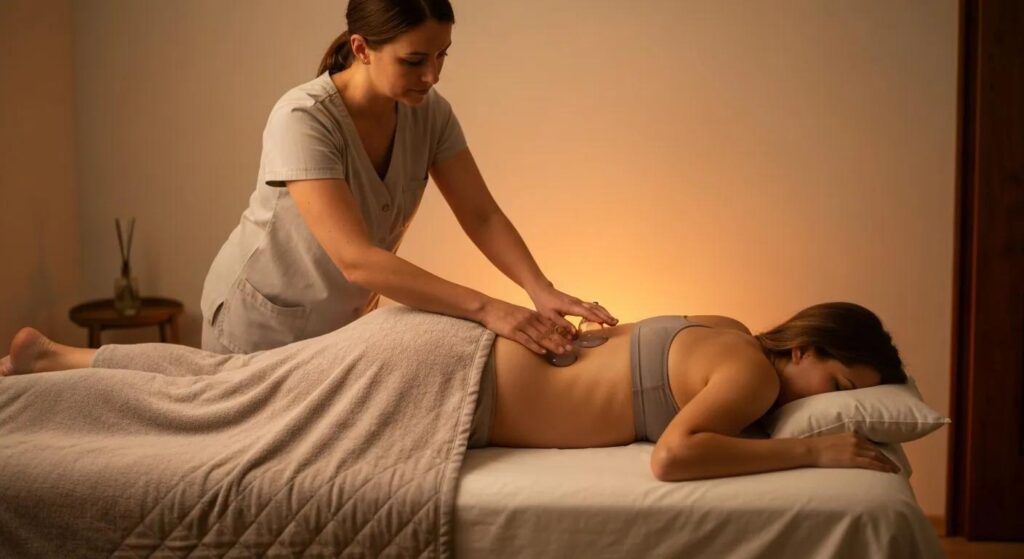
Massage cupping therapy uses controlled suction with cups to move soft tissue, increase local blood flow, and encourage lymphatic drainage. When applied with pregnancy-specific precautions and overseen by trained clinicians, it can safely complement prenatal and postpartum care for many clients. This guide describes what massage cupping does, how it affects the maternal body, and which techniques and timing rules clinicians rely on to reduce risk during pregnancy and while recovering after birth. You’ll find trimester-specific safety guidance, protocols for postpartum scars and swelling, and examples of how cupping is combined with physical therapy and assisted stretching to support return-to-function. Practical checklists, quick-reference tables, and answers to common parental concerns—about contractions, scar work, and pelvic-floor coordination—help expectant and new mothers in Grand Rapids and Grandville make informed, clinician-led decisions about cupping and related maternal-wellness options.
What Is Massage Cupping Therapy and How Does It Work for Pregnancy and Postpartum?
Massage cupping is a manual therapy that applies suction—typically with silicone or glass cups—to lift the skin and superficial fascia. That mechanical lift increases local circulation, helps free adhered tissues, and promotes lymphatic flow. The effects combine a mechanical change in tissue tension with neurophysiological responses: better perfusion supports healing, reduced fascial tension eases movement restrictions, and skin receptor stimulation can lower pain signaling. For pregnant and postpartum clients these effects often mean less back and hip tension, improved fluid movement for swelling, and better tissue readiness before assisted stretching or pelvic-floor work. Clinicians tailor cup type, suction level, and placement to each client’s anatomy and recovery stage, typically preferring gentler gliding techniques over strong static suction when indicated. Understanding these mechanisms clarifies why cupping—when individualized and practitioner-led—can be a useful complement to obstetric clearance and rehab plans for expectant and new mothers.
What Are the Types and Techniques of Massage Cupping Therapy?
Practitioners choose cupping techniques to match therapeutic goals and safety needs. Dry or static cupping places cups and holds suction for focused myofascial release; gliding or massage cupping uses oil and sliding cups to move fascia and blend with soft-tissue massage. Silicone cups offer easy manual control and fast release, which makes them a common choice in pregnancy when lower suction and quick removal are preferred. Glass cups can provide firmer, longer suction but are typically reserved for less-sensitive areas. Clinicians also adjust suction intensity and hold times—shorter, milder applications for pregnant clients—and avoid direct placement over the abdomen and lower pelvis unless explicitly cleared. These technique choices keep treatments inside safe therapeutic windows while addressing common maternal complaints like back and shoulder pain.
How Does Cupping Therapy Benefit Circulation, Muscle Tension, and Healing?
Cupping supports recovery through improved microcirculation, mechanical decompression of fascial adhesions, and enhanced lymphatic return. Increased blood flow brings oxygen and nutrients to overworked muscles and scar sites, while negative pressure can reduce local swelling and encourage remodeling of adhered collagen. Neurophysiological effects—like reduced muscle guarding and parasympathetic activation—can lower pain and promote relaxation and sleep, which are important for maternal recovery. Clinical summaries and practitioner experience suggest these mechanisms often translate into measurable reductions in pain and better mobility when cupping is part of a broader rehabilitation plan. Recognizing how cupping works helps clinicians decide when it’s a helpful adjunct and when other interventions should take priority.
Is Cupping Therapy Safe During Pregnancy in Grand Rapids?
Yes—when used with appropriate precautions. Properly applied cupping can be safe for many pregnant clients provided clinicians follow trimester-based guidelines, secure medical clearance when needed, and avoid higher-risk areas such as the abdomen and lower lumbar region in most cases. Safety depends on clinician training, chosen suction intensity, session length, and a clear review of the maternal medical history (including bleeding disorders, placental issues, and skin integrity). Below is a concise safety checklist clinicians use to reduce risk during prenatal cupping and to guide conversations with an OB/GYN or midwife if required. We also provide a quick-reference table for trimester-specific placement guidance and a set of questions patients should ask before a prenatal cupping visit.
Cupping during pregnancy follows several core safety rules:
- Avoid direct abdominal and low-pelvic placement unless explicitly cleared by the obstetric provider.
- Obtain medical clearance for clients with high-risk pregnancies or known bleeding/clotting conditions.
- Use lower suction and shorter contact times; favor gliding techniques over long static holds.
- Watch for dizziness, unusually heavy bruising, or pain—stop the session and reassess if those signs appear.
These rules reduce theoretical risks and set clear practitioner behaviors for prenatal care. Following them helps align cupping sessions with obstetric guidance and each client’s individualized risk profile.
Intro to trimester guidance table: The table below summarizes areas to avoid and practical clinician notes by trimester so pregnant clients and clinicians can quickly check session appropriateness. Review the table before scheduling a prenatal cupping appointment.
| Trimester | Areas to Avoid | Recommended Clinical Approach |
|---|---|---|
| First (0–13 weeks) | Avoid abdomen and lower back; be conservative with ventral work | Delay non-essential cupping to later trimesters when possible; focus on gentle massage and education; seek early OB clearance if concerns exist |
| Second (14–27 weeks) | Avoid direct abdominal placement; avoid strong lumbar suction near the sacrum | Use gliding techniques on the upper back and limbs; confirm routine prenatal clearance; monitor comfort and vitals |
| Third (28+ weeks) | Avoid abdomen and heavy lumbar suction close to the pelvis; watch for orthostatic symptoms | Prefer seated or side-lying positions; keep suction mild and sessions shorter; coordinate with the birth-care provider when indicated |
This table highlights trimester-based tradeoffs and how clinicians change placement and intensity as pregnancy progresses. Use it as a starting point for conversations with your care team and cupping clinician.
How Does Massage Cupping Support Postpartum Recovery for New Mothers in Grand Rapids?
Massage cupping can help postpartum recovery by improving scar mobility, reducing localized swelling via lymphatic stimulation, easing musculoskeletal pain, and restoring functional mobility when included in a staged rehab plan. The lifting action of cupping can assist remodeling of C-section scars and reduce tethering that limits trunk and hip movement, while improved lymph flow can ease postpartum edema in the limbs and trunk. Timing and medical clearance matter: clinicians check wound healing, rule out infection, and assess tissue sensitivity before starting scar-specific cupping, and typically follow a conservative timeline tailored to each client’s birth type and milestones. The table below pairs common postpartum issues with cupping benefits and suggested initiation windows to help new mothers and their care teams decide when to begin treatment.
Postpartum benefits list introduction: Below are the primary postpartum advantages of adding cupping to a recovery plan and typical timing considerations.
- Scar tissue remodeling: Gently mobilizes adhesions to improve pliability at healed C‑section sites.
- Lymphatic support: Suction and movement encourage drainage to reduce postpartum swelling.
- Pain reduction: Decompressing myofascial restrictions decreases nociceptive input and improves comfort for feeding and caregiving.
- Mobility improvement: Reducing adhesions and muscle tension helps clients return to functional activities and assisted stretching more safely.
These benefits are strongest when cupping is coordinated with physical therapy and pelvic-floor care rather than used alone. The table that follows outlines condition-specific timing and typical starting points for postpartum cupping interventions.
| Postpartum Condition | Cupping Benefit | Typical When to Start |
|---|---|---|
| C-section scar adhesion | Scar mobilization and improved tissue glide | After the surgical wound is fully healed and cleared by the surgeon (commonly 6–12 weeks), following clinician assessment |
| Postpartum swelling (lymphedema/edema) | Supports lymphatic drainage and reduces limb/trunk swelling | Within days to weeks postpartum when no contraindications exist and under a clinician-directed plan |
| Low back and pelvic girdle pain | Reduces myofascial tension and improves movement | As soon as acute healing allows and the clinician confirms stability (often within weeks) |
This table helps prioritize which conditions respond to cupping and when clinicians usually begin treatment. Relying on objective healing signs and clinician clearance improves safety and treatment effect.
Fuel Health & Wellness postpartum integration note: For mothers seeking coordinated care, Fuel Health & Wellness combines massage and cupping with physical therapy and assisted-stretching services to build individualized recovery plans led by DPT clinicians. Our approach stresses medical clearance, conservative timing for scar work, and staged progression to assisted stretching to safely restore mobility. If you’re considering postpartum cupping, a consult with our multidisciplinary team can clarify readiness and next steps.
Effectiveness of Cupping Massage for Uterine Involution in Postpartum Mothers
This study examines physiological changes during the puerperium—such as uterine involution, lochia, and genital recovery—and evaluates whether postnatal cupping massage applied to abdominal and back meridian points affects the speed of uterine involution. The research aims to determine if cupping massage accelerates the uterus’s return to pre-pregnancy size.
THE EFFECTIVENESS OF CUPPING MASSAGE ON UTERINE INVOLUTION, M Machfudloh, 2022
How Is Massage Cupping Therapy Integrated with Other Maternal Wellness Services at Fuel Health & Wellness?
Cupping is most effective when it’s part of a multidisciplinary maternal-wellness plan that starts with a clinician evaluation, includes targeted soft-tissue work, and follows with therapeutic exercise and assisted stretching to restore function. A typical pathway begins with a DPT assessment to identify biomechanical drivers, followed by a cupping session to address adhesions and tissue mobility, then assisted stretching or pelvic-floor coordination work to translate tissue changes into improved movement. This coordinated workflow reduces overlap, aligns goals across visits, and builds measurable progress over weeks instead of offering only short-term relief. The table below outlines core services and what a typical session plan looks like for maternal clients pursuing comprehensive recovery.
| Service | Role in Care Pathway | Typical Session Plan |
|---|---|---|
| DPT Evaluation | Identify biomechanical impairments and medical-clearance needs | 45–60 minute intake with movement assessment and goal setting |
| Massage & Cupping | Target scar mobility, myofascial release, and lymphatic support | 30–45 minute modality session with tailored suction and placement |
| Assisted Stretching | Translate tissue gains into functional range and motor control | 20–30 minute guided stretching with home exercise progression |
This sequencing clarifies each service’s role and helps make cupping part of a plan that supports lasting functional gains rather than only temporary symptom relief.
How Does Cupping Complement Physical Therapy and Assisted Stretching for Pregnancy and Postpartum?
When cupping comes before assisted stretching, it can lessen tissue stiffness and adhesions so stretches are safer and more effective, improving range of motion and muscle activation. Clinically, cupping creates temporary tissue glide and reduces pain, then targeted assisted stretching reinforces neuromuscular patterns and builds stabilizer strength. For pelvic-floor coordination, improving lumbopelvic mobility and reducing superficial adhesions often makes internal and external rehabilitation work more comfortable and productive. Integrated plans typically span several visits with progressive goals—beginning with mobility and pain control, progressing to loading and functional retraining—so cupping’s mechanical effects are used within an evidence-informed rehab framework.
Who Are the Maternal Wellness Specialists Providing Expert Care in Grand Rapids?
Fuel Health & Wellness’s maternal-wellness team includes Doctors of Physical Therapy and specialist clinicians who collaborate on prenatal and postpartum care, prioritizing practitioner-led decisions for safe cupping and rehabilitation. Key contributors to maternal services include Dr. Eric Broadworth, Dr. Matt Zitny, and Dr. Alex Bosch, with clinician Aubree Muckle supporting integrated wellness. Our DPT-led model emphasizes assessment-driven plans and conservative progression for scar work and pelvic-floor coordination. That clinician-first approach ensures cupping is one component of a broader, individualized recovery path rooted in physical therapy principles.
What Are the Most Common Questions About Prenatal and Postpartum Cupping Therapy in Grand Rapids?
Expectant and new mothers commonly ask about contraction risk, scar treatment timing, contraindications, and how cupping fits with pelvic-floor rehab. The short answers below are evidence-forward and action-oriented—designed to help you know which concerns need medical clearance and which are routine clinical considerations. Discuss any remaining questions with your OB and your rehabilitation clinician.
- Is cupping likely to cause contractions or preterm labor? Short answer: When cupping avoids the abdomen and lower pelvis and uses low suction, it’s unlikely to trigger contractions. Still, clinicians obtain medical clearance for pregnancies with elevated risk.
- Can cupping help C-section scar tissue? Short answer: Yes—after the incision is fully healed and cleared by the surgeon, gentle cupping can improve scar mobility and reduce tethering as part of a staged rehab plan.
- Who should avoid prenatal or postpartum cupping? Short answer: Anyone with active infection, uncontrolled bleeding disorders, certain obstetric complications, or open wounds should defer cupping until cleared by a provider.
- How many sessions are typically needed? Short answer: It varies by condition, but many patients see meaningful change across 3–6 sessions when cupping is combined with physical therapy and home exercises.
These answers are starting points—clinicians use specific medical histories and objective healing signs to individualize timing and technique. If you’re unsure, prioritize medical clearance and a DPT evaluation to align cupping with your overall maternal-care plan.
Is Cupping Therapy Likely to Cause Contractions or Other Pregnancy Risks?
Risk depends on placement and intensity: cupping’s effects are superficial and do not reach the uterus, and avoiding the abdomen and lower lumbar area near the pelvis minimizes theoretical contraction risk. Consensus from clinical summaries and practitioner experience suggests low-suction work on the upper back, shoulders, and limbs is unlikely to induce contractions. Still, anyone with prior preterm labor, placenta previa, or other obstetric complications should get explicit clearance. Mitigation strategies include lower suction, shorter hold times, seated or side-lying positions to avoid orthostatic changes, and close monitoring during sessions. The practical recommendation: secure obstetric clearance for pregnancies with risk factors and document the session plan and responses with a DPT-led clinician.
Can Cupping Help With C-Section Scar Tissue and Pelvic Floor Recovery?
Cupping can support C-section scar mobilization and improve the external tissue environment that helps pelvic-floor rehab—provided the incision is fully healed and the surgeon has cleared external scar work. Gentle cupping can reduce superficial adhesions and improve glide between fascial layers, which helps pelvic-floor therapists access better movement patterns and reduce pain during internal or external exercises. Clinical practice begins with an assessment of scar sensitivity, surrounding tissue strength, and neuromuscular inhibition; once cleared, staged scar sessions paired with pelvic-floor coordination exercises produce complementary outcomes. Coordination between the scar-treatment clinician and pelvic-floor specialist ensures timing aligns with internal healing and that objective markers—like normalized scar texture and pain-free range—guide progression.
Why Choose Fuel Health & Wellness for Safe Prenatal and Postpartum Massage Cupping in Grand Rapids?
Fuel Health & Wellness structures maternal care around a DPT-led, integrated model that blends massage and cupping with physical therapy and assisted stretching to create individualized recovery plans for expectant and new mothers in Grand Rapids and Grandville. We emphasize thorough clinician assessment, pregnancy-aware technique modifications, and clear coordination with medical providers to confirm clearance and track progress. Our evidence-informed approach pairs soft-tissue modalities with therapeutic exercise to restore function, reduce pain, and support active lifestyles through pregnancy and beyond. For families seeking an evaluation-driven path to safe cupping and rehab, scheduling a consult with our maternal-wellness team starts the process of tailored planning and coordinated follow-up.
What Makes Fuel Health & Wellness’s Holistic Approach Unique for Maternal Care?
Fuel Health & Wellness combines modality expertise with physical therapy principles so functional outcomes matter as much as symptom relief. Our DPT-led framework ensures assessment drives modality choice and progression, reducing risks tied to nonspecific cupping applications and highlighting connections to pelvic health and assisted-stretching interventions. Local access across Grand Rapids and Grandville supports continuity for prenatal visits and staged postpartum follow-ups, while our clinician team collaborates to align timing, technique, and therapeutic exercise. This integrated model fosters safer, more efficient recovery paths for maternal clients pursuing comprehensive rehabilitation.
How Can New Mothers Schedule a Consultation for Massage Cupping Therapy?
To explore cupping as part of postpartum recovery, request an initial clinician evaluation that documents birth type, wound-healing status, and any pelvic-floor concerns; bring medical-clearance notes from your obstetric provider if you have them. At intake, our team completes a movement assessment, screens for contraindications, and outlines a staged plan that may include cupping sessions, assisted stretching, and pelvic rehabilitation as appropriate. Practical next steps are confirming surgical clearance for scar work, discussing session pacing and goals with a DPT, and scheduling follow-ups to track tissue and functional progress. Book through our standard scheduling process to ensure continuity between evaluation and therapy with our maternal-wellness specialists.
Frequently Asked Questions
Can cupping therapy be used for pain relief during pregnancy?
Yes. When provided by trained clinicians, cupping can ease back and hip discomfort in pregnancy by reducing muscle tension and improving circulation. It’s important to avoid certain areas—like the abdomen and lower back—and follow trimester-specific guidance. Always check with your healthcare provider before starting any new treatment to confirm it’s right for you.
What should I discuss with my clinician before starting cupping therapy?
Tell your clinician about your full medical history—any pregnancy complications, bleeding or clotting disorders, and skin conditions. Ask about the practitioner’s prenatal experience, the specific cupping techniques they plan to use, expected outcomes, session frequency, and possible side effects. This exchange helps ensure the treatment fits your health needs and recovery goals.
How does cupping therapy support emotional well-being during postpartum recovery?
Cupping can support emotional recovery by promoting relaxation and easing physical discomfort, which often improves sleep and mood. The hands-on nature of therapy also offers a calming, nurturing experience that many new mothers find emotionally supportive. Combining cupping with other wellness strategies can further support mental health during the postpartum period.
Are there any contraindications for cupping therapy during pregnancy?
Yes. Active infections, uncontrolled bleeding disorders, certain obstetric complications (for example, placenta previa), and open wounds are reasons to avoid cupping until you’re cleared by a healthcare provider. Always have your clinician assess your specific situation to confirm safety.
How can cupping therapy be integrated with other postpartum treatments?
Cupping pairs well with physical therapy and assisted stretching as part of a comprehensive recovery plan. It can reduce muscle tension and improve tissue mobility, helping subsequent PT sessions or pelvic-floor work be more effective. Coordination among specialists ensures treatments complement each other and align with recovery goals.
What is the typical duration and frequency of cupping sessions during postpartum recovery?
Session length and frequency depend on individual needs. Most cupping sessions run 30–45 minutes, and many clients benefit from 3–6 sessions spread over several weeks. Your clinician will tailor the schedule to your healing, pain levels, and functional goals, with regular reassessments to optimize the plan.
Conclusion
Massage cupping therapy can offer meaningful support for expectant and new mothers—improving circulation, easing muscle tension, and aiding recovery after childbirth. When cupping is integrated into clinician-led care, it helps mothers make informed choices that prioritize safety and function throughout pregnancy and postpartum. If you’re considering cupping as part of your recovery, reach out to our team for a personalized consultation and next steps. Explore our services to start a safer, more effective path toward a comfortable motherhood experience.