


Stepping into an injury prevention plan is one of the most powerful decisions you can make for your long-term health, vitality, and mobility. While many people associate physical therapy with recovery after an accident or surgery, the proactive strategies available can fundamentally change your physical future, helping you avoid painful setbacks and chronic conditions. If you are seeking to maintain an active lifestyle or simply want to move without fear of pain, starting a relationship with a trusted professional in Physical Therapy in Grand Rapids, MI, is your best proactive step. These preventative programs are built on personalized assessments and education, empowering you to identify and correct the movement patterns that currently put you at risk.
Physical therapy is essentially health maintenance for your musculoskeletal system. It moves beyond generic fitness plans to evaluate your unique biomechanical strengths and weaknesses. By addressing areas of tightness, instability, or poor form before they result in an acute injury like a sprain or chronic issue like tendonitis, physical therapists work to fortify your body’s natural defenses. The goal is not just to fix a problem, but to create lasting resilience and confidence in your physical activities, whether that is lifting a heavy box or training for a marathon.
At Fuel Health & Wellness, our philosophy centers on this forward-thinking approach. We believe that everyone, regardless of age or activity level, can benefit from a tailored preventative strategy designed to keep them moving optimally. This commitment to proactive care ensures that you can continue doing the activities you love for years to come, without interruption.
Why is focusing on prevention better than waiting until an injury occurs?

The traditional approach to health often involves waiting for something to break before seeking professional help; this is known as reactive care. Reactive treatment, while necessary for acute trauma, typically requires extended periods of reduced activity, intensive treatment sessions, and sometimes involves costly procedures or medications. The cycle of pain, injury, and forced recovery can be frustrating and significantly reduce your quality of life over time.
In contrast, choosing a proactive physical therapy program emphasizes long-term wellness and sustainability. It is an investment that pays dividends by preserving your function and independence. By identifying potential risks early, you can implement simple, targeted changes that halt the progression of instability or imbalance into a full-blown injury. This forward-looking mindset is particularly crucial in areas like Physical Therapy Grand Rapids, MI, where active lifestyles—from hiking the city’s many trails to engaging in local sports leagues—are common.
The Cost of Reactivity
When an injury forces you into reactive treatment, the cost extends far beyond the medical bills. You lose valuable time away from your work, hobbies, and family activities. A severe ankle sprain, for example, might sideline a runner for six weeks, interrupting training, causing mental stress, and requiring intensive rehabilitation just to return to baseline function.
Reactive care also often means treating the symptom without fully understanding the underlying root cause. If poor hip stability contributed to the ankle sprain, a reactive treatment might fix the ankle but leave the hip issue unaddressed, making a recurrence highly likely. This short-term fix can lead to a cycle of repeated injuries and chronic discomfort over the years.
The Value of Proactivity and Long-Term Recovery Grand Rapids
Proactive physical therapy flips the script. Instead of waiting for the break, you seek out a therapist to assess your movement health when you are feeling well. This perspective leads to better health outcomes and a higher quality of life. Early detection of minor deficiencies allows for quick, low-impact intervention, often saving hundreds or thousands of dollars in future medical expenses and lost work time.
For individuals committed to long-term recovery Grand Rapids, a preventative plan acts as a performance enhancer and safety net. By working on specific strength deficits or flexibility issues, you not only reduce injury risk but often see improvements in athletic performance, endurance, and overall comfort during daily activities. It’s about building a robust physical foundation that is resistant to the wear and tear of life.
The Personalized Assessment: Discovering Hidden Risks

Generic workout routines are often ineffective for injury prevention because they fail to account for individual variances in body structure, history of past injuries, and unique movement habits. The cornerstone of effective preventative care is a comprehensive, personalized assessment performed by a licensed physical therapist.
This initial evaluation is a detailed detective work process, moving beyond simple pain points to analyze your entire kinetic chain, which is how your body segments move and coordinate together. The therapist looks for small functional deficits that a general practitioner or a coach might overlook, but which pose a significant risk over time.
Gait and Movement Analysis
How you walk, run, and perform fundamental movements says everything about your body’s efficiency and compensatory patterns. The therapist will observe your gait (the way you walk) and how you perform tasks like squatting, lifting, or reaching. These seemingly simple movements often expose imbalances.
For example, observing a slight internal rotation in the knee during a squat can indicate weakness in the gluteal muscles (glutes). Over thousands of repetitions, this improper form can lead to chronic knee pain, patellofemoral syndrome, or even ligament strain. Correcting this pattern is a key step in preventing future issues.
Postural Screening and Ergonomics
The majority of modern injuries are not caused by acute trauma but by repetitive stress, often stemming from poor posture in the workplace or at home. The long hours spent sitting at a desk, looking down at a phone, or standing incorrectly all contribute to muscle strain, headaches, and low back pain.
A postural screening identifies deviations from optimal alignment, such as rounded shoulders or a forward head posture. The physical therapist will then provide specific ergonomic adjustments for your workspace—changing your chair height, monitor placement, or keyboard position—to immediately reduce strain on your neck and spine. This education is vital for reducing the risk of conditions like carpal tunnel syndrome or tension headaches.
Identifying Muscle Imbalances
Muscle imbalances occur when one muscle group is significantly stronger or tighter than its opposing group (e.g., strong quadriceps but weak hamstrings, or tight chest muscles but weak upper back). These imbalances pull joints out of alignment and are a leading cause of overuse injuries.
The therapist uses manual muscle testing and functional screens to pinpoint these disparities. Once identified, the intervention plan shifts the focus toward strengthening the weaker areas and lengthening the tighter areas. This process restores joint integrity, ensuring that forces are distributed evenly across the joint during movement. It is this precise, diagnostic approach that separates generalized exercise from targeted, preventative physical therapy. Physical Therapy Grand Rapids, MI is your partner in achieving a balanced, resilient body structure.
Comprehensive Injury Prevention Exercises

Effective injury prevention is built upon a foundation of specific exercises that enhance stability, strength, and mobility. These exercises are not high-intensity workouts; rather, they are precise movements designed to rewire your neuromuscular connections and stabilize vulnerable joints.
A crucial concept in this training is proprioception, which is your body’s innate sense of its position and movement in space. Good joint stability relies heavily on this awareness, allowing your muscles to react instantly to unexpected movements, such as stepping on an uneven surface. Training proprioception helps to prevent sudden, acute injuries like ankle sprains and knee twists.
Core Stability: The Body’s Powerhouse
The core is much more than the abdominal muscles you see; it’s a cylinder of muscles (including the deep abdominal muscles, the back extensors, and the diaphragm) that stabilizes the spine and pelvis. A weak core compromises virtually all movement, placing undue stress on the lower back, hips, and knees.
Key exercises to build functional core strength include:
- Planks: Excellent for strengthening the entire core unit, holding the spine in a neutral position against gravity. They train endurance and control.
- Bird Dog: Improves anti-rotation and coordination, teaching the core to maintain stability while the arms and legs move.
- Dead Bugs: Works the deepest abdominal muscles (transverse abdominis) by challenging the core to resist the force of moving limbs while the back stays flat.
Consistency with these movements is more important than intensity, as the goal is developing muscular endurance to support the spine throughout the day, whether you are sitting or lifting.
Lower Body Strength and Stability
The lower body, including the hips, knees, and ankles, supports your entire structure and absorbs impact with every step. Strengthening the posterior chain (glutes and hamstrings) is paramount for preventing the most common lower body issues, including runner’s knee and lower back pain.
Effective lower body preventative movements:
| Exercise | Primary Preventative Benefit | Muscles Targeted |
| Glute Bridges | Reduces lower back pain, improves hip extension power, prevents hamstring strains. | Gluteus Maximus, Hamstrings, Core |
| Wall Sits | Builds isometric endurance in the quadriceps and glutes, enhances knee joint stability. | Quadriceps, Gluteus Medius, Calves |
| Clamshells | Strengthens the Gluteus Medius, critical for hip and pelvic stability during walking and running. | Gluteus Medius, Hip Abductors |
These exercises target muscles that are often dormant from excessive sitting, awakening them so they can correctly support major joints during activity. This prevents stronger, often tighter muscles from taking over and causing strain.
Enhancing Joint Control and Proprioception
Training balance and joint control is essential for injury risk reduction, especially as you age or return to sports. A physical therapist will introduce exercises that safely challenge your body’s proprioceptive system. This includes closing your eyes during balance exercises or using unstable surfaces.
Examples of balance exercises include:
- Single-Leg Stands: Starts simply, holding the position for thirty seconds, but can be progressed to include arm movements or head turns.
- Heel-to-Toe Walk: Improves dynamic balance and coordination, mimicking the movement needed for stable walking and navigating uneven terrain.
- Ankle Alphabet: Gently strengthens the small stabilizing muscles around the ankle joint, improving reaction time to prevent rolling an ankle.
By improving your proprioception—your joint position sense—you train your muscles to fire faster when you stumble, providing that critical micro-second of stability that can prevent a fall or serious ligament damage. This targeted training is a key element of any long-term recovery program offered by our team of specialists.
Specific Applications for Daily Life and Sport

Preventative physical therapy is not just for athletes; it is a necessity for everyone who uses their body. The principles of assessment and targeted conditioning apply across different physical demands, from desk work to post-surgical preparation.
Workplace and Home Ergonomics
For professionals in Grand Rapids who spend hours working at computers, the constant, low-level strain of an improper setup accumulates over time, resulting in significant issues. The physical therapist’s role here is to act as an ergonomic consultant, analyzing your routine and suggesting simple, impactful changes.
These suggestions often involve:
- Adjusting your seat height so your feet are flat on the floor and your knees are level with your hips.
- Ensuring your monitor is at eye level, which prevents forward head posture and associated neck tension.
- Recommending micro-breaks for stretching and movement every thirty to sixty minutes to break up prolonged static postures.
These minor adjustments reduce the daily burden of poor posture, directly preventing chronic pain conditions like upper crossed syndrome and repetitive strain injuries.
Prehabilitation for Surgical Success
If a surgery, such as a joint replacement or a spinal procedure, is scheduled, prehabilitation—or “prehab”—is a proactive approach that dramatically improves post-operative outcomes. Entering surgery with stronger, more flexible, and better-conditioned muscles leads to a faster, less complicated recovery period.
Prehab involves strengthening the muscles surrounding the joint that will be operated on. It also ensures you are proficient with the post-operative exercises and mobility techniques before you even enter the hospital. This familiarity provides confidence and reduces anxiety, both of which are critical elements of successful rehabilitation. Fuel Health & Wellness offers specialized prehabilitation protocols tailored to various planned procedures.
Sports Performance and Injury Risk Reduction
For athletes, whether competitive or recreational, injury risk reduction is synonymous with performance enhancement. A physical therapist can perform a thorough screen to identify asymmetries or movement flaws that are hindering performance and increasing the chance of injury under stress.
This often involves video analysis of sport-specific movements—like a golf swing, running stride, or pitching motion—to isolate flaws in the kinetic chain. By correcting these mechanics, the athlete can use their body more efficiently, generating more power while simultaneously protecting vulnerable joints. This proactive performance therapy ensures a longer, healthier competitive career.
Long-Term Wellness and Education
Preventative physical therapy aims to make you the expert on your own body. The treatment extends far beyond the clinic, empowering you with the knowledge and tools necessary for lifelong health maintenance. This focus on self-management is key to achieving true long-term recovery Grand Rapids.
Self-Management Strategies
A core goal of any preventative program is teaching you how to recognize the early warning signs of physical stress or fatigue. This might involve noticing a specific tightness or discomfort that precedes a full flare-up of pain. Armed with this awareness, you know precisely which targeted stretches or exercises to deploy immediately.
Your physical therapist will provide a “home exercise program” that is simple, quick, and sustainable. This small, daily commitment to movement health acts as your personal maintenance plan, helping you self-correct minor issues before they become major problems requiring professional intervention.
Nutritional and Hydration Support
While physical therapists are not nutritionists, they recognize that musculoskeletal health is deeply tied to whole-body wellness. Inflammation, muscle repair, and energy levels all rely on proper fuel and hydration. Therapists often provide general guidance on supporting your body’s needs for optimal physical function.
For example, ensuring adequate hydration is critical for the elasticity of connective tissues, while sufficient protein intake is essential for muscle repair and strength maintenance. A comprehensive approach to wellness acknowledges these interdependent factors in injury prevention.
The Role of Warm-up and Cool-down
Many injuries occur because muscles are asked to perform intensely before they are prepared. A proper warm-up increases blood flow and joint mobility, physically preparing your tissues for activity. The therapist will teach you the difference between dynamic and static stretching.
- Dynamic Warm-up: Involves movement, such as leg swings and arm circles. This should always be performed before activity.
- Static Cool-down: Involves holding a stretch for a period of time to increase flexibility. This is best performed after activity when muscles are warm.
Integrating these practices ensures that your body transitions safely into and out of physical exertion, minimizing the risk of sudden muscle strains or tears. If you are ready to proactively protect your physical future, we encourage you to look at the professionals at Fuel Health & Wellness to see how we can guide your journey.
Specialized Preventative Care in Grand Rapids
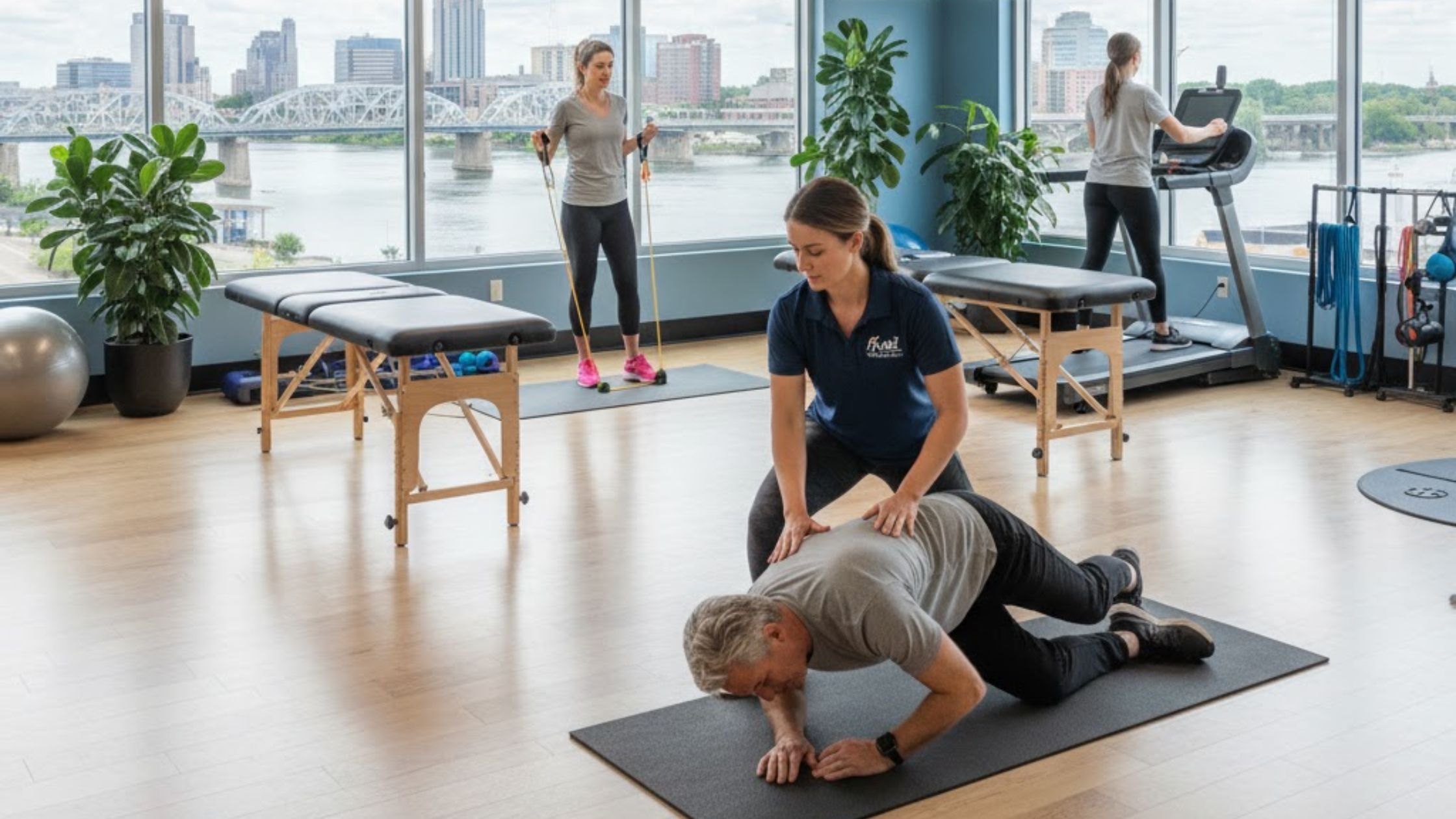
The breadth of specialized physical therapy services available today reflects the deep understanding of complex human movement systems. Preventative programs often focus on niche areas that address specific risk factors associated with neurological conditions or age.
Neurological Disorder Management
For individuals diagnosed with neurological disorders, such as Parkinson’s disease, multiple sclerosis, or post-stroke deficits, preventative physical therapy is vital for slowing functional decline and preventing secondary complications. These programs focus heavily on maintaining mobility, balance, and coordination.
Specialized techniques like the Lee Silverman Voice Treatment (LSVT) BIG are utilized to encourage bigger, more deliberate movements in patients with Parkinson’s, helping to prevent falls and maintain independence. The proactive management of symptoms through physical activity is a cornerstone of long-term recovery Grand Rapids for these patients.
Vestibular and Balance Training
The vestibular system (the inner ear and its connection to the brain) is responsible for regulating balance and spatial orientation. Dysfunction in this system can lead to dizziness, vertigo, and a dramatically increased risk of falling, especially in older adults.
A physical therapist trained in vestibular rehabilitation can diagnose and treat these issues. Preventative exercises often include habituation, gaze stabilization, and balance re-training activities performed under careful supervision. This is one of the most effective forms of fall prevention, helping people maintain confidence and mobility in their daily lives.
Women’s and Men’s Pelvic Health
Pelvic health physical therapy is a critical but often overlooked area of preventative care. The pelvic floor muscles support the bladder, bowel, and uterus (in women) and contribute to core stability. Weakness or dysfunction in these muscles can lead to issues like urinary incontinence, pelvic organ prolapse, or chronic pain.
Preventative pelvic floor training, guided by a specialist, teaches proper muscle activation and coordination, significantly reducing the risk of these issues, particularly during and after pregnancy, or as part of age-related hormonal changes.
Common Preventative Services Offered
| Service | Primary Preventative Goal | Typical Client |
| Ergonomic Assessment | Prevents chronic pain related to posture (neck/back pain, headaches, carpal tunnel). | Office workers, students, remote employees. |
| Fall Risk Assessment | Prevents falls and fracture injuries by improving balance and strength. | Older adults, individuals with neurological conditions. |
| Sports Screening | Prevents acute muscle tears, ligament sprains, and overuse injuries; enhances efficiency. | Athletes, runners, weekend warriors. |
| Post-Surgical Prehab | Prevents complications, reduces recovery time, and improves functional outcome after surgery. | Patients awaiting joint replacement, spinal fusion, or reconstructive surgery. |
The specialized expertise in Physical Therapy Grand Rapids, MI ensures that whether your risk is mechanical, neurological, or related to specific life stages, a comprehensive and customized plan is available to protect your health.
Frequently Asked Questions About Preventative Physical Therapy
1. Does a physical therapist need a referral from a doctor for prevention services?
In many states, including Michigan, you can utilize direct access laws to see a licensed physical therapist for an evaluation without a referral from a physician. This allows you to bypass potential delays and begin your preventative program immediately. While some insurance plans may still require a physician’s referral for coverage, it is always best to check with your specific provider and the clinic.
2. How often should I see a physical therapist for injury prevention?
The frequency is completely customized to your needs. For someone starting a new sport or with a complex movement history, a few assessment sessions followed by weekly sessions for four to six weeks may be needed to establish a routine. Once a program is established, many people transition to a maintenance schedule, seeing their therapist every three to six months for a “physical check-up” to screen for new imbalances.
3. What types of injuries can preventative physical therapy help me avoid?
Preventative physical therapy significantly reduces the risk of a broad range of injuries, including:
- Overuse injuries: Tendinitis (Achilles, patellar, rotator cuff), plantar fasciitis.
- Acute trauma: Ligament sprains (ACL, ankle sprains), muscle strains (hamstring, groin).
- Chronic pain: Low back pain, neck tension headaches, shoulder impingement.
The foundational principle is reducing stress on vulnerable tissues through improved strength, flexibility, and alignment.
4. Is preventative physical therapy expensive?
While there is an initial investment, preventative care is almost always more cost-effective than reactive care in the long run. Treating a severe, acute injury often involves the costs of emergency room visits, specialist consultations, imaging (X-rays, MRIs), medication, and weeks or months of intensive rehabilitation. By contrast, a preventative plan helps you avoid these expenditures entirely.
5. What should I look for when choosing a preventative physical therapist?
Look for a therapist who emphasizes a holistic, one-on-one approach rather than simply handing out generic exercise sheets. Key indicators of quality include: advanced certifications (like board-certified specialists in orthopedics or sports), a strong focus on manual therapy and patient education, and clear goals for your independent self-management. You want a therapist who not only fixes movement problems but also teaches you why they happened.
Your Proactive Path to Lasting Health
Taking control of your physical well-being starts today, long before a crisis forces you to pause your life. Choosing proactive care is choosing a path of resilience, where you are an active participant in your health, not a passive victim of chance. The commitment to maintaining a robust and pain-free body is a foundational investment that pays exponential returns in quality of life and sustained independence.
By addressing your unique biomechanics, mastering essential injury prevention exercises, and implementing tailored ergonomic adjustments, you are safeguarding your ability to engage with the world fully. If you are ready to begin this journey and establish a personalized plan for long-term recovery Grand Rapids, we are here to support you every step of the way. We strongly believe that the combination of deep clinical knowledge and authentic human connection is the key to success.
We encourage you to explore all the specialized services offered at Fuel Health & Wellness and see how our comprehensive approach ensures you receive the highest standard of care available. When you decide to take that all-important first step toward a stronger, more resilient future, the next move is simple: contact us to schedule your initial preventative movement assessment. You deserve a life lived without the threat of avoidable injury.