


The daily reality of living with chronic pain or arthritis often feels like a constant negotiation between movement and discomfort. Every morning brings the question: How far can I move today without triggering a flare-up? For many years, conservative advice centered mainly on managing pain through medication, heat/cold therapies, and low-impact activity. However, a highly effective, proactive treatment known as Assisted Stretch Therapy is quickly gaining recognition as a cornerstone strategy for improving quality of life, not just masking symptoms.
This form of therapy involves a trained specialist gently manipulating your body into deep, targeted stretches that you could not achieve safely on your own. It moves far beyond the simple static stretches performed after a workout. For individuals managing conditions like osteoarthritis (OA), rheumatoid arthritis (RA), fibromyalgia, or other forms of musculoskeletal pain, the idea of deep stretching can feel intimidating or even risky.
The core concern is always safety: Can a focused, manual stretch intervention actually help an inflamed or compromised joint without causing further damage? The answer, supported by increasing clinical evidence and anatomical understanding, is a resounding yes, provided the therapy is administered by qualified professionals who understand joint contraindications and disease progression. This comprehensive guide will analyze the effectiveness and safety protocols of assisted stretching.
At Fuel Health & Wellness, we specialize in customizing these routines to respect the body’s current state while progressively encouraging greater range of motion and pain reduction. Our approach focuses on long-term functional improvement, ensuring every session is therapeutic, restorative, and deeply beneficial. This therapy is not just about making muscles longer; it is fundamentally about restoring the nervous system’s tolerance for movement and reducing the guarding patterns that exacerbate chronic conditions.
Is Assisted Stretch Therapy a Substitute for Physical Therapy in Chronic Pain Management?

This is perhaps the most common question among those seeking non-pharmacological methods to manage persistent discomfort. The short answer is no; assisted stretching is not typically a replacement for comprehensive physical therapy (PT), but rather a powerful complementary and often vital tool that addresses a specific need. Physical therapy focuses on diagnosis, strengthening, gait correction, and rehabilitation following an acute injury or surgery.
However, the specialized attention offered in a session of Assisted Stretch Therapy focuses purely on flexibility, soft tissue manipulation, and increasing the joints’ passive and active range of motion. This targeted focus is precisely what makes it so effective for chronic pain. The therapist is able to break through the protective muscle tension that builds up around painful joints—a process called muscle guarding—without the client having to exert strain.
Chronic conditions like arthritis cause the surrounding muscles to tighten defensively, which limits joint movement and increases stiffness. This stiffness then further restricts blood flow, creating a self-perpetuating cycle of pain and limited mobility. Assisted stretching provides the external force necessary to gently, safely, and progressively break this cycle, facilitating greater joint lubrication and comfort.
The key differentiation lies in scope: PT is broad and diagnostic, whereas assisted stretching is specific, highly focused on tissue compliance, and aimed at instantaneous, yet sustainable, flexibility gains. For individuals whose main limiting factor is severe tightness and reduced flexibility—a hallmark of many inflammatory and degenerative conditions—assisted stretching can provide immediate, noticeable relief that aids subsequent PT or strength training efforts.
Understanding Chronic Pain, Arthritis, and Joint Contractures

To truly appreciate the benefit of professional stretching, we must first understand the physiological changes that occur within the body of a chronic pain sufferer. Pain is complex, involving not just tissue damage but also neurological sensitization and sustained muscular tension.
The Role of Inflammation and Stiffness
Arthritis, whether it is the wear-and-tear of Osteoarthritis or the autoimmune response of Rheumatoid Arthritis, involves joint inflammation. This inflammation leads to pain, swelling, and, crucially, increased stiffness. The body’s natural response to this perceived threat is to lock down the area, stiffening the muscles and connective tissues (fascia) that surround the joint.
This phenomenon of persistent stiffness leads to the formation of joint contractures—a permanent shortening of the joint capsule, muscles, and soft tissues. Contractures severely limit range of motion (ROM) and often become a primary source of chronic pain, making everyday tasks like reaching or bending incredibly difficult. Regular, targeted stretching is one of the few non-surgical interventions that can effectively combat and reverse these contractures.
The systemic effect of inflammation also involves chemical messengers that promote pain sensitization throughout the body. By improving local circulation and gently elongating the protective tension in the muscle fibers, assisted stretching helps reduce localized inflammation and calms the hyper-sensitive nerve endings. This reduction in neurological excitability translates directly into diminished pain perception over time.
Why Flexibility Decreases with Age and Disease
Flexibility is often overlooked as a component of health, but it is intrinsically linked to mobility and pain management. As we age, the collagen fibers in our tendons and ligaments naturally lose water content and become less extensible, leading to reduced tissue elasticity. This process is drastically accelerated by chronic inflammatory diseases.
Furthermore, inactivity—often necessitated by pain—causes muscle atrophy and the shortening of the musculotendinous unit (MTU). Sedentary behaviors, such as prolonged sitting common among those with chronic pain, also lead to imbalances where certain muscles (like hip flexors) become perpetually tight while their opposing muscle groups (antagonists, like glutes) become weak or deactivated.
Assisted stretching intervenes by applying controlled, specific forces to the MTU and fascia. A trained therapist can work deep into the hip flexors, hamstrings, and pectoral muscles—areas notoriously tight in chronic pain patients—to systematically increase their resting length. This provides the foundation for improving chronic pain flexibility, enabling clients to move with less resistance and greater comfort.
The Science of Safety: How Assisted Stretching Protects Compromised Joints
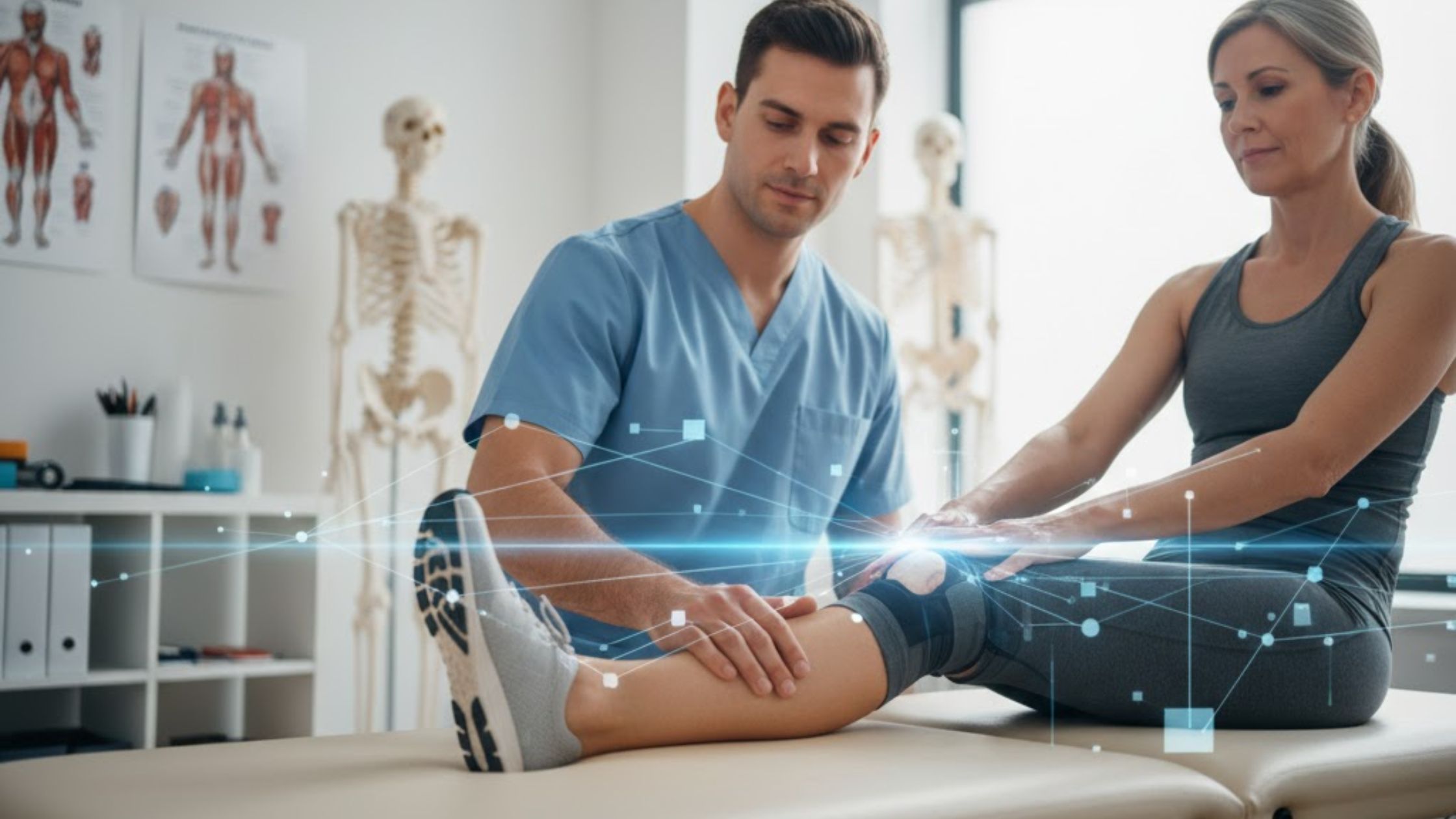
For those with joint integrity issues, safety is paramount. The primary risk in self-stretching is pushing too hard or applying force incorrectly, leading to muscle tears or joint aggravation. Assisted stretching, when performed correctly by a qualified specialist, significantly mitigates these risks, making it an incredibly safe assisted stretching modality.
The Importance of Trained Professionals
The therapist acts as the body’s governor, ensuring the stretch remains within the joint’s safe, passive range of motion (ROM). They utilize deep anatomical knowledge to position the client’s limbs optimally, bypassing damaged joint surfaces and isolating the intended muscle group. This precision prevents unwanted shearing or compression forces on vulnerable areas like the knee or hip joint.
A professional will always conduct an initial assessment, discussing pre-existing conditions (e.g., knee replacement, acute flare-ups, severity of osteoporosis) and identifying contraindications. They are trained to monitor non-verbal cues and subtle muscle responses, adjusting the stretch intensity in real-time. This level of personalized care cannot be replicated in a group class or self-guided routine. If you are ready to learn more about the certified experts who manage these delicate procedures, you should consider exploring who makes up the meet the team at our clinic. Their expertise is what ensures safety and efficacy in every session.
Proprioceptive Neuromuscular Facilitation (PNF) as a Key Technique
Many modern assisted stretching sessions rely heavily on techniques derived from PNF. PNF is not simply a passive pull; it is a sophisticated method that utilizes the nervous system to achieve deeper, safer stretches.
This technique typically involves three steps:
- Passive Stretch: The therapist moves the limb to the first point of tension.
- Contraction: The client gently contracts the target muscle group against the therapist’s resistance (an isometric hold) for a few seconds. This leverages the Golgi tendon organ reflex, which senses tension.
- Deepened Stretch: After the contraction, the muscle is temporarily fatigued and relaxed. The therapist then moves the joint further into a new, greater range of motion safely.
By using the body’s own neurological reflexes, PNF stretching achieves greater elongation with less perceived discomfort than static stretching alone. This neurological bypass is critical for chronic pain patients, as it helps re-educate the nervous system that deep movement is not a threat.
Maximizing Effectiveness: Range of Motion, Pain Threshold, and Posture
The effectiveness of assisted stretching stems from its ability to create both immediate, acute changes in tissue length and long-term, chronic adaptations in the body’s physical and neurological structure.
Targeting Fascia and Connective Tissue
Muscles are not isolated entities; they are encased in a complex web of connective tissue called fascia. In chronic pain conditions, fascia can become restricted, tight, and dehydrated, leading to widespread aches and stiffness that feel muscular but are actually fascial. Assisted stretching, particularly when combined with gentle manipulation or massage techniques, focuses on releasing these fascial adhesions.
Releasing the fascia frees the underlying muscle to move its full length. This whole-body approach recognizes that restriction in one area, such as tight hamstrings, impacts distant areas like the lower back or even the neck. This holistic, full-body focus is essential for individuals with conditions like fibromyalgia, where pain is generalized and deeply seated in the connective tissues.
One of the cornerstones of advanced stretching techniques is understanding the difference between methods like PNF and traditional approaches. Exploring PNF Stretching vs. Traditional Assisted Stretch Therapy can shed light on why certain neurological techniques yield superior and safer results, especially in complex cases involving long-standing stiffness.
The Immediate and Long-Term Impact on Mobility
A single session of assisted stretching often yields an immediate increase in the range of motion of the target joints. Clients feel lighter, more mobile, and often experience instant, though temporary, relief from tension. This immediate feedback loop is highly motivating for those who often feel stagnant in their condition.
However, the real effectiveness is seen through consistency. Chronic stretching, performed regularly over weeks and months, causes physiological changes in the MTU itself, specifically altering its resting length and increasing the client’s stretch tolerance—essentially, raising the point at which the stretch begins to feel painful or uncomfortable. Over time, the body learns to tolerate movement that previously seemed impossible or too painful.
Furthermore, integrating deeper sessions focused purely on tissue release and mobility can dramatically accelerate recovery. If you are already engaging in movement therapies, adding a regimen of Assisted Stretch Therapy will optimize those outcomes by ensuring your muscles and joints are pliable enough to handle the strengthening components of rehabilitation.
| Condition/Goal | Primary Benefit of Assisted Stretching | Safety Considerations |
| Osteoarthritis (OA) | Increases joint ROM, reduces stiffness and joint-related pain by easing surrounding muscle tension. | Avoid aggressive stretches during acute effusion (swelling); focus on gentle, static holds and PNF. |
| Rheumatoid Arthritis (RA) | Maintains mobility in affected joints; reduces guarding. | Do not stretch during a severe inflammatory flare-up; ensure low intensity to protect compromised ligaments. |
| Fibromyalgia/Chronic Pain | Lowers overall muscle tension and nervous system stress; improves sleep quality. | Requires very gentle pressure initially; focus on global, full-body myofascial release, not isolated muscle pulls. |
| General Flexibility Loss | Restores youthful elasticity and improves posture. | Minimal risks; focus can be higher intensity Active-Assisted techniques. |
Beyond the Joint: Systemic Benefits for Chronic Conditions

The profound benefits of assisted stretching extend well beyond the mechanical structure of the joint and muscle. For chronic pain patients, the systemic effects—affecting the whole body and mind—can be just as impactful as localized relief.
Stress Reduction and the Nervous System
Chronic pain is inherently stressful, elevating cortisol levels and keeping the sympathetic nervous system (fight-or-flight) in constant overdrive. This hyper-aroused state perpetuates muscle tension, creating a vicious cycle. Assisted stretching is a potent intervention against this stress response.
During a session, the therapist ensures the client is completely relaxed and passive, often utilizing breathwork to deepen the relaxation. The deep, controlled movements, especially those involving the hips and spine, trigger the parasympathetic nervous system (rest-and-digest). This activation reduces stress hormones and promotes the release of endorphins, the body’s natural painkillers. This can have profound ripple effects on daily functioning.
One such systemic benefit often overlooked is the ability of deep relaxation achieved during therapy to improve nocturnal rest. Many individuals with chronic pain suffer from insomnia due to positional discomfort or nerve pain. Exploring the Better Sleep Benefits of Assisted Stretch Therapy reveals how calming the nervous system and easing muscular tension can translate into longer, more restorative sleep cycles. This is an essential component of overall healing and chronic pain management.
Circulation, Healing, and Lactic Acid Clearance
Improved circulation is a fundamental pillar of healing. When muscles are chronically tight, blood flow to those tissues is restricted. This limits the delivery of fresh oxygen and nutrients and impedes the removal of metabolic waste products, such as lactic acid, which contribute to soreness and localized aches.
Assisted stretching acts like a manual pump. As the muscle is lengthened and then relaxed, fresh, oxygenated blood rushes into the tissue. This enhanced circulation promotes tissue healing, accelerates recovery from physical activity, and helps flush out inflammatory metabolites. This systemic boost in oxygen delivery supports overall cellular health and function, critical for managing conditions involving widespread tissue involvement.
For individuals who struggle with exercise due to stiffness, assisted stretching is an excellent preparatory activity, enabling them to safely engage in strength training or cardiovascular exercise. By maintaining a routine with Fuel Health & Wellness, you ensure your body remains a flexible, well-circulated environment conducive to reducing pain flare-ups and accelerating recovery, supporting every other facet of your wellness journey. This consistency is the key to sustained progress.
Tailoring Treatment: Specialized Protocols for Specific Needs
A significant advantage of professional assisted stretching over generalized self-stretching is the ability to tailor the protocol to highly specific conditions and goals. The application of stretch therapy for arthritis must be handled differently than the therapy designed for a competitive athlete, for example.
Addressing Degenerative Conditions (OA)
For Osteoarthritis, the focus is on maintaining and regaining lost joint space and mobility, particularly in the large load-bearing joints like the hips and knees. The stretches must be precise to avoid putting pressure on compromised cartilage. The therapist uses a slow, steady, static progressive stretch, increasing the hold time to promote viscoelastic creep in the connective tissues, slowly lengthening the shortened capsule.
The sessions prioritize stretching the major supporting muscle groups (e.g., quadriceps, hamstrings, hip abductors) to improve joint tracking and reduce the compressive force placed on the joint surfaces during movement. This supportive flexibility helps the joint move more efficiently, reducing friction and pain.
Managing Autoimmune Conditions (RA) and Soft Tissue Syndromes (Fibromyalgia)
In cases of Rheumatoid Arthritis, the primary consideration is the integrity of the ligaments, which can be weakened by the disease process, especially in the spine and hands. Stretching here is extremely gentle and non-aggressive. The goal is maintenance of existing ROM rather than maximal gains. PNF techniques are often avoided in acutely inflamed joints.
For conditions like Fibromyalgia, where muscle tension is widespread and tenderness is high, the sessions emphasize myofascial release, supported posturing, and light, systemic stretching to reduce global hyper-sensitivity. The focus shifts entirely to calming the nervous system, as aggressive stretching can trigger a pain response. This is why having an expert guide the session is non-negotiable for these delicate conditions.
While the primary focus here is chronic pain, it is important to recognize that specialized stretch protocols exist for every demographic. For those engaged in repetitive movement or high-impact training, understanding Injury Prevention for Runners with Stretch Therapy highlights how these precise methods can drastically reduce the incidence of common overuse injuries like Achilles tendonitis or plantar fasciitis.
Benefits for Active Lifestyles and Athletes
Even outside of chronic disease management, professional stretching acts as a crucial preventative maintenance tool. Athletes, weekend warriors, and those with highly active jobs often develop imbalances from repetitive motions (e.g., cyclists, golfers). These imbalances, if left unchecked, invariably lead to injury and potentially chronic issues down the road.
Assisted stretching ensures that opposing muscle groups maintain optimal length and balance. For instance, a runner may have overdeveloped quads and tight calves. The stretch therapist can target these specific areas, restoring balance and reducing the strain on the kinetic chain. This specialization shows how adaptable the therapy is. To fully appreciate the range of benefits offered to physically active clients, read more on Assisted Stretching for Athletes and Active Lifestyles, which demonstrates its broader therapeutic utility.
The Protocols of Fuel Health & Wellness: Ensuring Authentic, Safe Care
Our commitment at Fuel Health & Wellness is to provide authentic, evidence-based care that integrates seamlessly with your overall health strategy. We understand that trust is built on competence and transparency, especially when dealing with sensitive conditions like chronic pain. Our protocols are designed to maximize the efficacy of Assisted Stretch Therapy while prioritizing client safety above all else.
Every new client undergoes a detailed intake process that reviews medical history, current pain levels (often using the Visual Analogue Scale, or VAS), and specific movement goals. We collaborate with your existing healthcare team—including rheumatologists, general practitioners, or chiropractors—to ensure our therapy complements their treatment plan and avoids contraindications.
Our therapists are rigorously trained in multiple modalities, including PNF, Active-Assisted, and Myofascial techniques. They hold advanced certifications and possess a deep understanding of pathological movement patterns. This commitment to expert training is the bedrock of the safety promise we make to every client, allowing them to relax fully, knowing they are in experienced hands. The passive relaxation component is itself a powerful tool, contributing to long-term pain reduction and increased movement tolerance.
FAQs About Assisted Stretching and Chronic Pain
Does assisted stretching help with nerve pain like Sciatica?
Yes, assisted stretching can be highly beneficial for managing nerve-related pain such as sciatica. Sciatica is often caused by tight muscles—most commonly the piriformis or hamstrings—compressing the sciatic nerve. Targeted stretches, particularly those involving the hips and glutes, can decompress the nerve root by releasing the tension in these deep tissues. A skilled therapist knows precisely how to stretch the area without irritating the nerve further.
How often should someone with chronic arthritis pain receive assisted stretching?
The ideal frequency depends on the severity and type of arthritis, but typically, clients with chronic pain benefit most from weekly or bi-weekly sessions initially. Consistency is paramount. Regular sessions prevent the rapid recurrence of muscle guarding and stiffness. As flexibility improves and pain levels decrease, the frequency can often be reduced to a maintenance schedule (e.g., every three or four weeks).
Are there any types of arthritis that should avoid assisted stretching?
While assisted stretching is safe for almost all forms of chronic arthritis, clients should avoid deep, intense stretching during acute inflammatory flare-ups, especially in joints with visible swelling (joint effusion) or active synovitis. In these cases, the focus shifts to gentle, passive range of motion exercises or light, systemic myofascial release in adjacent, unaffected areas to reduce overall tension. A consultation with both a rheumatologist and the stretch therapist is essential.
How is assisted stretching different from a deep tissue massage for chronic pain?
Both therapies address soft tissue, but they work differently. Deep tissue massage focuses on releasing localized knots and trigger points through sustained pressure and friction, primarily treating muscle soreness and tightness. Assisted stretching focuses on lengthening the entire muscle and connective tissue unit to increase the joint’s range of motion and mobility. They are highly complementary: massage releases the tension, and stretching utilizes the new freedom of movement to promote long-term length and flexibility.
What should I look for in a stretch therapist if I have a condition like Fibromyalgia?
Look for a therapist with specific training in neurological pain conditions, not just sports recovery. They should prioritize client feedback, use gentle, non-aggressive techniques, and understand the difference between healthy resistance and neurological pain. The therapist should be patient, focus on breathwork, and have a detailed understanding of myofascial meridians and the autonomic nervous system. To start your journey with us and discuss your specific concerns, please contact us directly.
Conclusion: A Path to Greater Mobility and Less Pain
The question of whether Assisted Stretch Therapy is safe and effective for people with chronic pain or arthritis is answered definitively through a combination of physiological evidence and specialized professional care. It is not a miracle cure, but rather a scientifically backed, low-risk intervention that delivers tangible, measurable results in flexibility and movement tolerance.
By utilizing techniques like PNF and focusing on systemic relaxation and circulation, assisted stretching moves beyond temporary pain relief. It strategically works to reverse the physical manifestations of chronic pain, primarily joint contractures and muscle guarding, which are often the true barriers to a higher quality of life. The effectiveness is maximized when the therapy is consistent and tailored to the client’s unique pathology, ensuring that the compromised joints are respected while the surrounding tissue is strategically lengthened.
If your daily life is limited by stiffness, reduced mobility, or persistent muscle aches associated with a chronic condition, professional assisted stretching offers a pathway forward. It allows you to reclaim movement, reduce reliance on self-medication, and integrate into a more active, pain-managed lifestyle. Begin your journey toward sustained flexibility today.